sich in Sprache begegnen
Kunst über Sprache mit Texten in einfacher Sprache
Migration is a phenomenon that has always shaped societies. When it comes to questions of integration and identity, language—the native language one brings with them and the acquisition of a foreign language as a project for nearly every traveler—plays a key role. Although the theoretical figure of the artist-nomad has acquired a certain patina, the exhibition pursues the thesis that contemporary art does not merely dissolve into an “International Art English” saturated with trigger words. It also has visually eloquent contributions to make on the subject of language. Artists who travel—whether voluntarily or not—are interesting partners for getting to the bottom of foreign languages and questions of language mediation.
The exhibition features works on paper, installations, objects, and videos—all of which engage visually with the alphabet and vocabulary, with the rise and fall of languages, or with the tricky field of translation.
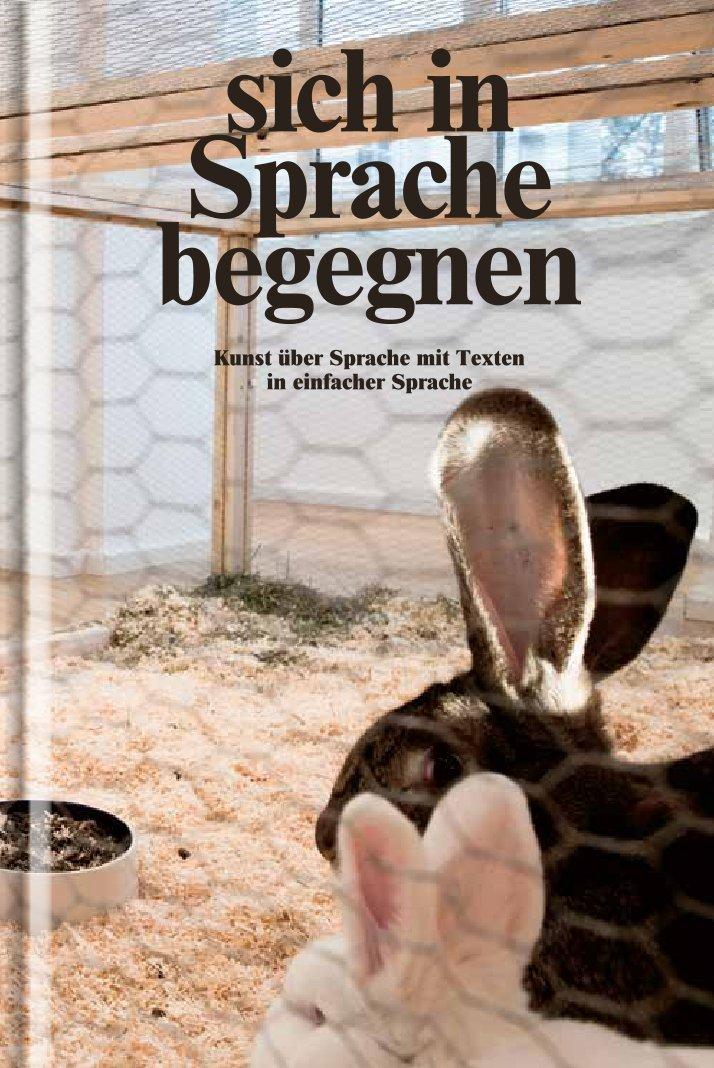
The question remains ever relevant: How do we communicate in a globalized world? Who teaches whom what, how, and why? Who holds the power? All manner of methods and strategies are up for debate. In the exhibition, language and languages are presented in various forms, including exercises, illustrated flashcards, murals, tapestries, neon signs, embroidery, books, images, sound, and gestures. At the heart of this is the question of communicative interaction among humans, plants, and animals. Potted plants, birds, and rabbits are also presented in the exhibition as language learners.
The exhibition Meeting in Language showcases a range of critical approaches, while also celebrating the joy of the unconventional and playful, the enigmatic, and invention. Through some of the works, it celebrates error and slip-ups, as well as humor, for whose deliberate use in language instruction the exhibition makes a case.
To accompany the exhibition, the publication sich in Sprache begegnen was released, featuring texts about all the works written in simple language.